Just say Montana!
The 'next' thing is Congress; also Indigenous House series on Alberta separatism

Weekend Newsrime
Markwayne Mullin recalls the smell of war
only joining the military was too big a chore
Now he’ll be the new Boss of ICE
for a president who is rolling the dice
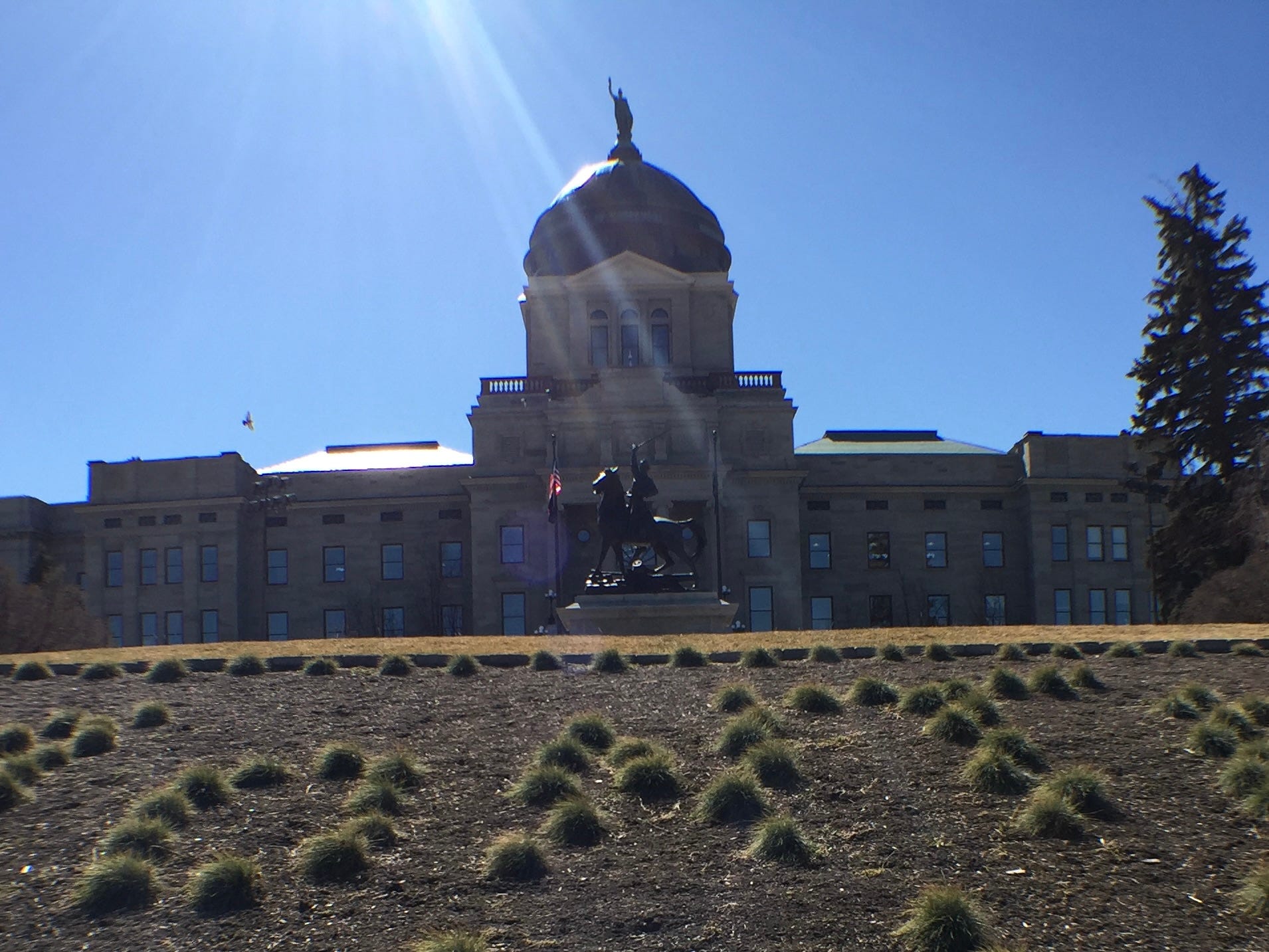
Montana Capitol building
Just say, Montana!
A decade ago, I wrote this paragraph:
“When someone tells you that your vote doesn’t matter, quietly say, “Montana.” Or if someone says that politicians don’t listen and that nothing will change, smile, and then say “Montana.” And, when you want proof that the Native vote works, evidence can be found in Montana.”
That evidence is still there. Start with the state legislature: There are four tribal citizens serving in the Senate and 7 in the House, a total of 11. Or 7.30 percent. And the state’s Native population (depending on who’s counting) ranges from 6.6 percent to 8 percent.
This is why those numbers matter: Alaska Natives make up about 16 percent of the state population, yet legislative representation is at 2 percent. Arizona Natives are about 6 percent of the population, the legislature 4 percent. Across the country, the idea of representation “parity” is aspirational. But in Montana its been that way for a long time, and population parity has been a fact over the past decade.
The thing about having that many Native Americans serving in the legislature is that you are building a bench. This is the training ground for Congress, even the presidency. The late Jeanne Givens, the first Native American woman to run for Congress, once told me. “I ran for Congress because it was the next thing.” (Givens, Couer ‘d Alene, had served in the Idaho legislature until her bid for the U.S. House in 1988.)
This is the “next thing” election in Montana.
Jonathan Windy Boy has served in the Montana House and Senate for a total of 24 years representing Rocky Boy. He is Chippewa Cree. And, as Lee Newspapers points out: The American Indian caucus “has mostly grown since Windy Boy started serving in the Legislature in 2003.”
If Democrat Windy Boy wins a June primary, he will face incumbent Republican, U.S. Rep. Troy Downing.
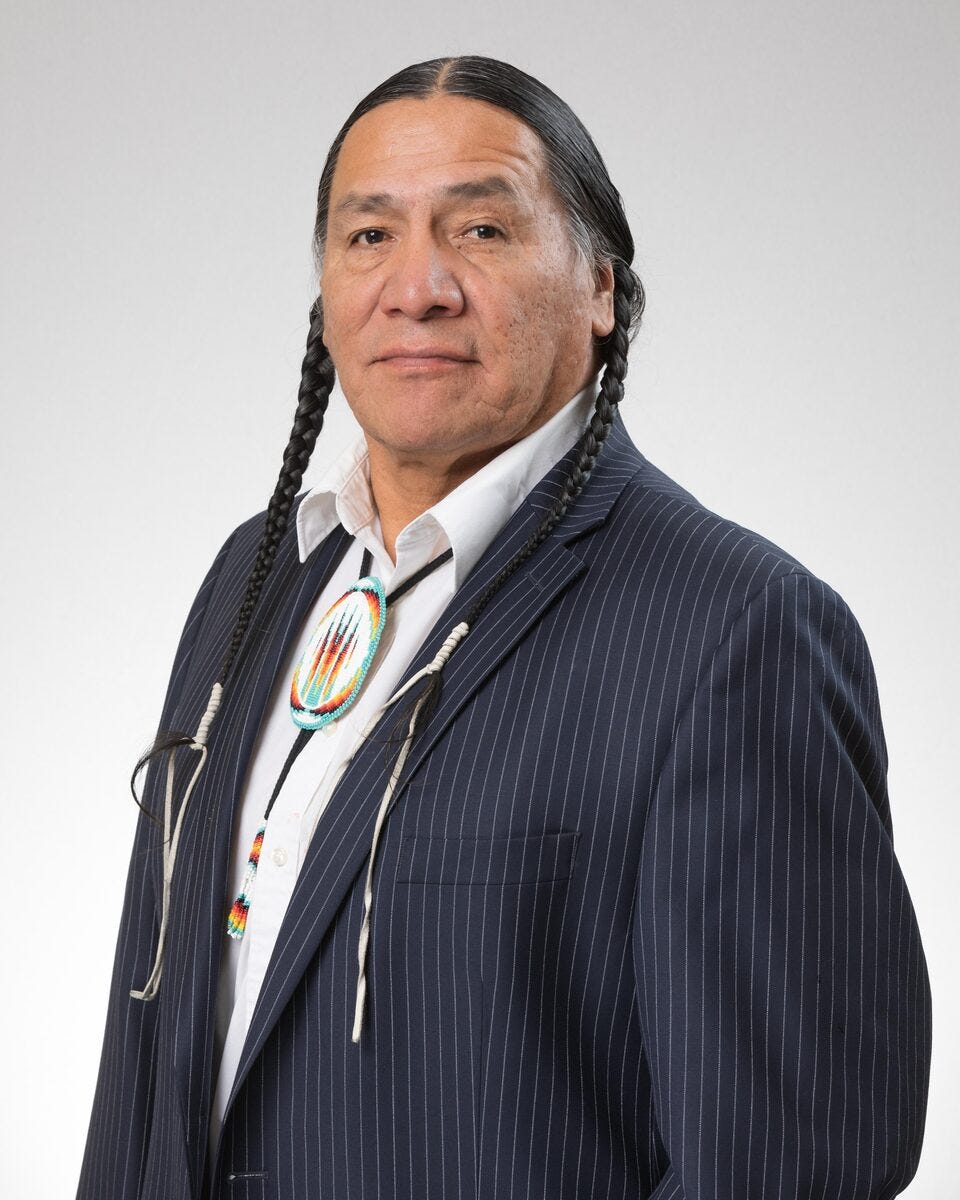
Jonathan Windy Boy
From Lee Newspapers:
Windy Boy had been encouraged to run against Downing for the past few weeks before he announced plans to file Tuesday. He had been on the fence but then he saw an article by the Gazette last week on Downing and his run for reelection. The story noted the race has relatively few entrants, with the Downing touting his past wins in Congress.
“That was the straw that broke the camel’s back for me, and his intention to proceed with the same agenda as you had in the past year,” Windy Boy said.
He said the tax cuts brought by the One Big Beautiful Bill will increase the federal debt, while Montanans will struggle with the non-renewal of marketplace health plan subsidies. A majority of 78,000 Montanans relied on subsidies to reduce the cost of their healthcare plan prior to 2026.
We’re heading down a path that just isn’t Montana,” Windy Boy said in an interview with Lee Newspapers.
One of his challenges will be raising enough money to be competitive. According to Open Secrets, Windy Boy “has run in 10 races for public office, winning 10 of them. The candidate has raised a total of $16,563.” The average winning candidate for a House seat spends $1.7 million.
What’s going on Montana?
Montana has had a lot of political drama in the last week. Montana’s Republican U.S. Sen. Steve Daines decided to retire on Wednesday, dropping his bid for re-election. He did this minutes before the filing deadline, leaving a clear path for his chosen successor, Kurt Alme, the U.S. Attorney in Montana.
From the Associated Press:
The maneuver appeared to be carefully orchestrated. Alme was almost immediately endorsed by President Donald Trump, who praised Daines — and essentially confirmed the senator’s role in engineering Alme to become his successor.
“Sadly for our Country, Steve’s Term is up,” Trump said, “and he has decided to leave the Senate and, ‘pass the torch’ to Kurt Alme, my TRUMP 45 and TRUMP 47 U.S. Attorney.”
CNN reported Thursday that it’s sources said Daines’ actions was designed so that a Democrats could not field a top-tier candidate.
From CNN:
Daines was aware that if he withdrew too soon then Democrats would have a chance at fielding one of several potential Democrats — namely former Sen. Jon Tester or former Govs. Brian Schweitzer or Steve Bullock. Any of those Democrats could have put the state on the map in the midterms and likely have sucked up enormous cash, as Democrats have done in red states like Alaska and Ohio, scrambling the race for the majority in the fall.
This inside deal will open up a campaign attack line, basically a theme about how Republicans did not trust voters.
There are five Democrats running for the June primary, Reilly Neill, Michael Hummert, Alani Bankhead, Christopher Kehoe and Michael Black Wolf.
Black Wolf is A'aninin from Ft. Belknap. He is the tribe’s Historic Preservation Officer (a sense of history would be useful for anyone thinking about political office).
Meanwhile in that same Senate race, former University of Montana President Seth Bodnar is running as independent.
From the Montana Free Press:
In an introductory campaign ad the former Army Green Beret and Rhodes Scholar unpacks his decision to run as an independent and not a Republican or Democrat.
“This country is in crisis, and our national political parties are failing us,” Bodnar said, over footage of him in a military uniform, hanging out with a family at home and hunting. “Montanans are an independent people, and they deserve an independent voice fighting for them in Washington, DC. I’m not a politician, I’m a soldier, a businessman, a husband, a father,” he said.
“The American dream is getting crushed, and both parties are to blame. They pit us against each other while they line their own pockets.”
There is no way a three-candidate race makes any sense unless you are Kurt Alme. In Montana, Democrats and independents only win as a bloc. And in order for that to happen there would have to be more inside dealing, such as the Democrats deciding it would not field any candidate.
(Unless Montana comes up with a run-off mechanism or Ranked Choice Voting. Unlikely in an election year. But then a candidate would have to reach 50 percent, plus one vote in order to win.)
2nd season of Breaking History on Indigenous House
First episode looks at the separatist push in Alberta — and why First Nations stick with the treaties made with the Crown.